
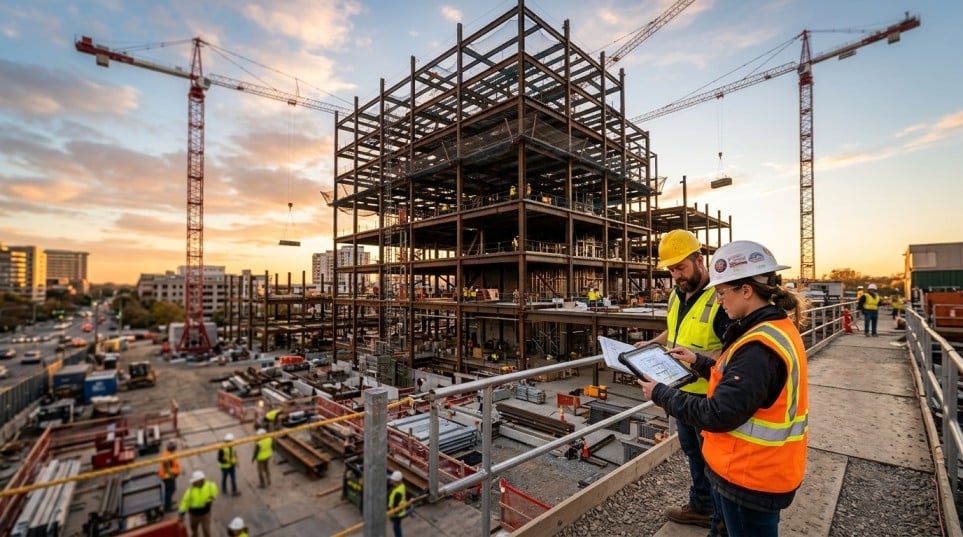
Commercial construction projects involve more than a building plan, contractor, and budget. Owners also have to manage schedules, design decisions, permitting, vendors, contracts, materials, and unexpected changes. Without a clear approach to construction risk management, a small issue can quickly become a costly delay or change order.
The goal is not to eliminate every possible risk. Instead, effective risk management helps project teams identify potential problems early, understand their impact, and create a plan to address them before they disrupt the project.
At Plan North Partners, risks are the very first thing we discuss on every project call. We believe this is the best way to address issues early and keep risks top of mind for everyone involved.
What Is Construction Risk Management?
Construction risk management is the process of identifying, evaluating, and controlling potential problems that could affect a construction project’s cost, schedule, quality, or performance.
For a commercial project, risks can come from many areas, including:
- Incomplete scopes and unclear responsibilities between stakeholders
- Contractor or vendor issues, and material shortages or price changes
- Design changes and permitting or compliance issues
- Scheduling conflicts, unexpected site conditions, and budget overruns
A strong risk management process gives owners better visibility into these issues before they become expensive problems.
1. Start With Construction Risk Identification
The first step is construction risk identification. Before work begins, the project team should review the scope, schedule, budget, design documents, contracts, site conditions, and key project assumptions.
Ask practical questions:
- What could delay the project?
- Which decisions could increase costs?
- Are there unclear responsibilities between parties?
- Are permits or approvals likely to affect the schedule?
- Are long-lead materials or equipment involved?
The earlier these questions are addressed, the more options the project team has to respond.
2. Complete a Construction Risk Assessment
After identifying potential issues, the next step is a construction risk assessment.
Each risk should be considered based on two basic factors: likelihood and impact. A problem that is unlikely to occur but could stop the project for several weeks may deserve more attention than a minor issue that happens frequently.
A simple assessment can categorize risks as low, medium, or high priority. This helps the team focus its time and resources where they matter most.
3. Use Construction Risk Analysis to Prioritize Problems
Construction risk analysis takes the assessment a step further by examining how individual risks could affect the project’s budget, schedule, quality, or objectives.
For example, a delayed equipment delivery may not seem significant on its own. But if that equipment is required before another trade can begin, the delay could affect multiple activities on the critical path.
This is why risks should be considered in the context of the entire project rather than as isolated problems.
4. Develop a Construction Risk Mitigation Strategy
Once risks have been prioritized, the team can determine how to reduce their potential impact. Construction risk mitigation can include several approaches:
- Clarifying scopes before contracts are finalized
- Reviewing design documents before construction
- Confirming long-lead items early
- Establishing clear communication and reporting procedures
- Maintaining realistic schedule milestones
- Building appropriate contingencies into project planning
- Assigning responsibility for monitoring specific risks
The right response depends on the type and severity of the risk. Some risks can be reduced, while others may need to be transferred, accepted, or monitored throughout the project.
Owner items also need careful attention. At Plan North Partners, we incorporate owner items and their vendors into the project at the right time, alongside the relevant project milestones. Selections, vendor requirements, delivery schedules, and installation dependencies are brought in when they matter, rather than all at once. This avoids overwhelming the project with a long list of risks and keeps the team focused on the items that need attention at each stage.
5. Build a Risk Management Plan in Construction
A risk management plan in construction does not need to be complicated. It should clearly document the major risks, their potential impact, who is responsible for monitoring them, and what action should be taken if they occur.
Construction Risk Register Example
A useful risk register might include:
| Risk | Potential Impact | Response | Owner |
|---|---|---|---|
| Permit delay | Schedule impact | Track approvals early | Project team |
| Material delay | Construction delay | Confirm lead times | Contractor |
| Design change | Cost increase | Review before release | Owner/design team |
| Scope gap | Change order | Clarify scope | Project manager |
| Owner item or vendor delay | Coordination or schedule impact | Align requirements with project milestones | Owner/project team |
Regularly reviewing this information keeps risk management active throughout the project instead of treating it as a one-time planning exercise.
Why Construction Project Risk Management Matters
Effective construction project risk management gives commercial owners better visibility into the issues that can affect their investment.
It can also improve communication between owners, architects, contractors, engineers, and other project stakeholders. When responsibilities and potential problems are identified early, teams can make decisions before an issue becomes a major disruption.
For business owners who are already focused on running their companies, having experienced project-management oversight can also reduce the amount of day-to-day coordination they have to handle themselves.
Frequently Asked Questions
What are the most common construction project risks?
Common construction project risks include cost overruns, schedule delays, design changes, incomplete scopes, permitting issues, contractor performance problems, material delays, and unexpected site conditions.
What is construction risk assessment?
Construction risk assessment is the process of evaluating identified risks based on their likelihood and potential impact on a project’s cost, schedule, quality, or objectives.
How can construction risks be mitigated?
Construction risk mitigation involves taking steps to reduce the likelihood or impact of potential problems. This may include clearer scopes, early procurement, design reviews, contingency planning, contract controls, and regular project monitoring.
Why is a construction risk management plan important?
A risk management plan in construction gives the project team a structured way to document risks, assign responsibility, monitor changes, and determine how issues should be addressed before they significantly affect the project.
Keep Your Commercial Project Moving
Risk is part of every commercial construction project, but unmanaged risk does not have to dictate the outcome. Early identification, thoughtful analysis, and consistent monitoring can help owners make better decisions throughout the project lifecycle.
If your team needs experienced support coordinating budgets, schedules, contractors, and other project stakeholders, learn more about Plan North Partners’ project management and owner’s representative services.